
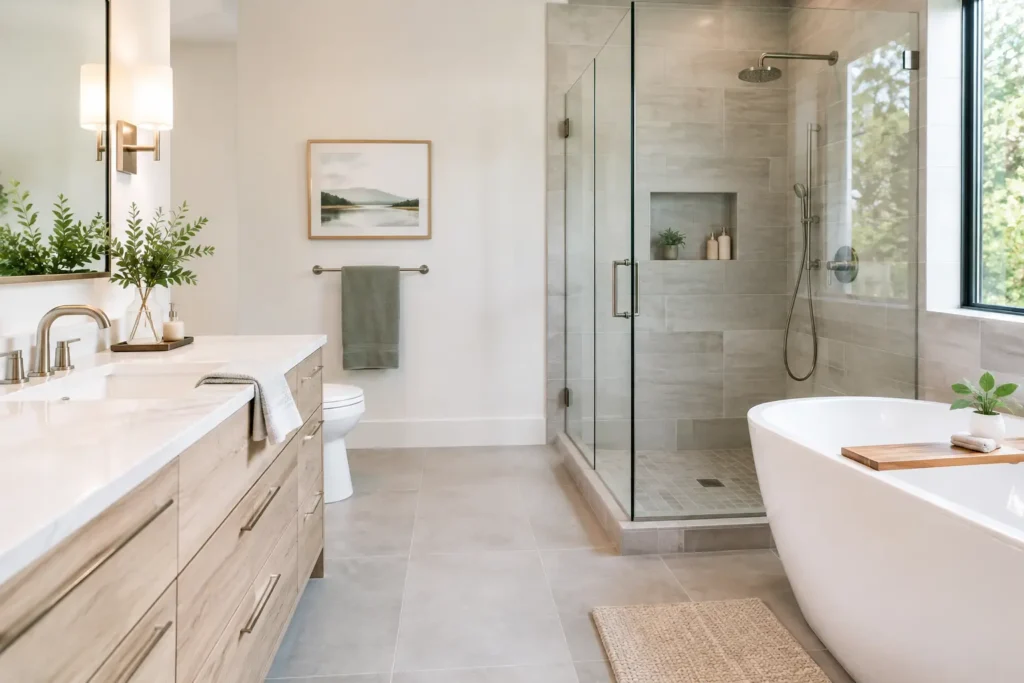
A bathroom should make the morning easier, not create a daily queue around a cramped vanity, poor lighting, or a shower that never quite feels comfortable. A well-planned bathroom renovation solves those practical frustrations while creating a room that feels calmer, cleaner, and more considered every time you use it.
For homeowners, the biggest gains rarely come from simply replacing old tile. They come from improving the layout, selecting finishes that can handle daily use, and making each decision work together before construction begins. That is how an outdated room becomes a functional retreat that also adds lasting appeal to the home.
Start a Bathroom Renovation With Daily Life
The right design begins with how your household actually uses the room. A busy family may need two sinks, generous drawer storage, and easy-to-clean surfaces. A couple may prioritize a larger walk-in shower, better task lighting, and a more open, spa-like atmosphere. In a compact apartment bathroom, the goal may be creating visual space without sacrificing storage or comfort.
Before choosing a tile color or tapware finish, consider the routine behind the room. Who uses the bathroom at the same time? What needs to be stored within reach? Is the current shower too small, the vanity too shallow, or the toilet positioned awkwardly? Clear answers help establish a scope that supports real life rather than a design trend alone.
A renovation also creates an opportunity to correct problems that have been tolerated for years. Poor ventilation, insufficient electrical outlets, water damage, weak lighting, and difficult-to-reach storage deserve attention early. Addressing them as part of one coordinated project is generally more practical than revisiting the room after new finishes are in place.
Smart Layouts Make Small Bathrooms Feel Larger
Square footage matters, but layout matters more. Even a modest bathroom can feel comfortable when circulation is clear and fixtures are placed with intention. The door should open without colliding with a vanity or toilet. The shower should feel usable, not squeezed into a leftover corner. Storage should be accessible without cluttering the room.
A floating vanity is often a strong option for smaller spaces because the visible floor beneath it creates a lighter, more open impression. Wall-mounted cabinets and recessed niches can provide practical storage while preserving valuable floor area. Larger mirrors can also improve both function and perceived space, especially when paired with layered lighting.
That said, not every popular feature suits every room. A walk-in shower can deliver a sleek, contemporary look, but its drainage and waterproofing must be carefully planned. A freestanding tub can make a visual statement, yet it may consume space that a family would use more effectively for a larger vanity or linen storage. The best choice depends on the room dimensions, your priorities, and the long-term needs of the household.
Plan Storage Before Selecting the Vanity
Bathroom clutter can quickly undermine an otherwise beautiful renovation. Instead of relying on countertop baskets after the project is complete, build storage into the design from the beginning. Deep drawers are often more useful than traditional under-sink cupboards because they make everyday items easier to find. A mirrored medicine cabinet can keep smaller essentials off the vanity, while a recessed shower niche provides a clean home for bottles and soaps.
Think beyond the obvious items. Towels, cleaning products, hair tools, cosmetics, medications, and spare toilet paper all need a place. A tailored storage plan keeps surfaces clear and helps the finished room retain its polished appearance.
Choose Durable Finishes Over Short-Lived Trends
Bathrooms are high-moisture environments, so materials need to perform as well as look good. Durable tile, quality waterproofing, reliable fixtures, moisture-resistant cabinetry, and appropriate ventilation are not glamorous line items, but they are central to a renovation that continues to look good over time.
Porcelain tile remains a practical choice for floors and shower walls because it is durable, water-resistant, and available in a wide range of styles. Large-format tile can create a more expansive look with fewer grout lines, though it may require careful preparation and installation. Smaller tile can add texture and grip in wet areas, but more grout means more surfaces to maintain.
For fixtures, select finishes with everyday care in mind. Matte black can look striking in a modern bathroom, while brushed nickel and chrome offer timeless flexibility. Brushed finishes may be more forgiving of water spots and fingerprints than highly polished surfaces. There is no single correct choice, but the finish should complement the broader home and fit the level of maintenance you are comfortable with.
Lighting deserves the same thoughtful approach. Overhead lighting alone can cast shadows at the mirror, making grooming more difficult. A combination of general ceiling light, focused mirror lighting, and optional accent lighting provides a more comfortable result. Warm, well-placed light helps the room feel inviting without sacrificing visibility.
Know What Should Be Settled Before Work Begins
The smoothest renovations are built on decisions made before demolition. Changes during construction can affect timing, cost, material availability, and the coordination of multiple trades. A detailed plan gives homeowners more control and provides the renovation team with a clear path from start to finish.
Key decisions should include the final layout, fixture locations, tile selections, vanity dimensions, lighting plan, and any structural or plumbing changes. It is also wise to confirm lead times for specialty items. A custom vanity, imported tile, or specific fixture collection can be worthwhile, but only if it fits the project schedule.
A transparent estimate should clarify what is included in the scope and where allowances may apply. This is particularly valuable when selecting items such as tile, fixtures, or cabinetry, where pricing can vary significantly. Clear communication reduces surprises and helps you invest where it will have the most noticeable impact.
Waterproofing and Workmanship Are Non-Negotiable
The most important parts of a bathroom are often hidden once the renovation is finished. Proper demolition, substrate preparation, waterproofing, plumbing, electrical work, and ventilation all protect the investment behind the tile and cabinetry.
This is why choosing a fully licensed and insured renovation contractor matters. Skilled trade workmanship and compliant processes give homeowners confidence that the room is not simply attractive on handover day, but built for reliable daily use. A contractor should be able to explain the proposed scope clearly, answer questions directly, and keep the project organized as work moves through each stage.
For homeowners in Waitara, Wahroonga, Normanhurst, Thornleigh, Pennant Hills, Beecroft, and nearby Sydney areas, local renovation experience can also be valuable when working within apartment requirements, established homes, and space-conscious floor plans.
Spend Where You Feel the Difference
A bathroom budget should reflect both appearance and performance. It can be tempting to direct most of the spend toward visible finishes, yet the best value usually comes from balancing the features you see with the work that ensures they last.
Invest in reliable waterproofing, quality fixtures, good lighting, and a vanity that delivers useful storage. These are elements you interact with daily. If the budget needs to be adjusted, consider simplifying decorative tile patterns or choosing a more readily available finish rather than compromising on core workmanship.
It is also worth thinking beyond resale alone. A bathroom renovation can support home value, but its immediate return is often a more enjoyable home. A comfortable shower, organized vanity, improved lighting, and durable surfaces can make a meaningful difference to the rhythm of every day.
A carefully planned bathroom does not need to chase every new trend to feel special. It needs to suit the people who use it, be built with dependable materials and workmanship, and offer a sense of comfort that lasts well beyond the final clean. With clear planning and the right renovation partner, the room can become one of the most rewarding improvements in the home.