
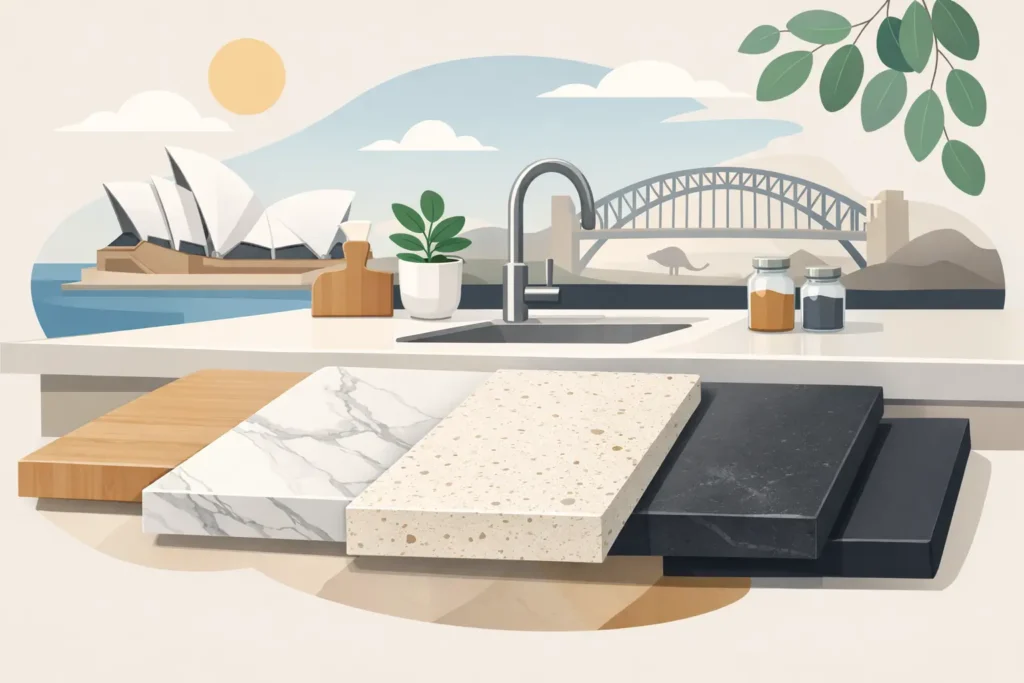
A kitchen benchtop is where weekday breakfasts, school projects, dinner preparation, and entertaining all meet. Choosing among the best kitchen benchtop materials Australia offers is not simply a design decision. It affects how easily your kitchen handles heat, spills, scratches, cleaning, and the pace of everyday family life.
For Sydney homeowners, the right surface should look polished on day one and remain practical years after the renovation is complete. Price matters, but so do maintenance requirements, cabinet layout, natural light, and how you genuinely use the room. A light-colored surface may make a compact apartment kitchen feel more open, while a darker, textured finish can bring depth and character to a larger family kitchen.
How to Choose a Kitchen Benchtop That Works Hard
Start with the demands placed on your kitchen rather than a showroom photo. A household that cooks most nights, has young children, or frequently hosts friends needs a forgiving, low-maintenance surface. A quieter household may be happy to choose a natural material that needs more care in return for a distinctive finish.
Think about heat resistance, stain resistance, scratch resistance, edge detailing, and the size of the slabs required. A very large island can create visible joins with some materials, while others can be fabricated in broader, more continuous pieces. Your sink style also matters. Undermount sinks create a clean contemporary look, but the benchtop material must be installed and sealed correctly around cutouts.
The best choice is usually one that balances appearance, daily upkeep, and budget. A premium-looking kitchen does not require the most expensive surface in every situation. Careful planning can place a higher-end material on the island, where it makes the strongest visual impact, and use a practical complementary surface elsewhere.
Best Kitchen Benchtop Materials Australia Homeowners Consider
Engineered stone alternatives
Engineered stone has long been popular for its consistent color, polished appearance, and easy-care performance. However, Australian regulations have changed the landscape for products containing crystalline silica. From July 2024, the use, supply, and manufacture of engineered stone with one percent or more crystalline silica has been prohibited in Australia, subject to limited exceptions.
That does not mean homeowners need to give up the refined look associated with stone. Many suppliers now offer compliant low-silica or silica-free engineered surfaces, often made with recycled materials, mineral blends, or other binders. These products can provide strong stain resistance and a broad choice of colors, from soft marble-inspired veining to clean concrete tones.
Ask your renovation professional for clear information about the material composition, suitability, fabrication requirements, and warranty. The product name alone is not enough. A compliant, well-installed surface is essential for both quality and peace of mind.
Porcelain and sintered stone
Porcelain and sintered stone are increasingly favored in contemporary Sydney kitchens. They are manufactured under high heat and pressure, creating an exceptionally dense surface that resists staining, heat, scratches, and UV exposure. This makes them particularly appealing for busy homes and for kitchens that open to outdoor entertaining spaces.
These materials are available in striking marble, limestone, concrete, and natural-stone looks. Large-format slabs can reduce the number of joins across an island and create a more streamlined result. They are also nonporous, so spills from red wine, cooking oil, or turmeric are less likely to become permanent marks when wiped up promptly.
The trade-off is cost and installation complexity. Porcelain can be more difficult to fabricate, especially around sink cutouts, thin edges, and waterfall ends. It requires experienced handling to prevent damage during transport and installation. For homeowners who want a highly durable, low-maintenance statement surface, that investment can be worthwhile.
Natural stone
Natural stone brings variation that manufactured materials cannot exactly replicate. Marble, granite, quartzite, and limestone each have their own movement, color shifts, and texture. A single slab can become the centerpiece of a kitchen, especially on a generous island with a waterfall edge.
Granite and quartzite are generally more durable options for active kitchens, although performance varies by slab and finish. Marble is timeless and elegant but more vulnerable to etching from acidic foods such as lemon juice, vinegar, and wine. Limestone offers a softer, organic appearance but can also be more porous and require careful sealing.
Natural stone is best for homeowners who appreciate character and accept that a living material may develop a patina. Proper sealing and thoughtful daily care help protect it, but no sealant makes a sensitive stone completely worry-free. If you prefer a flawless, uniform surface with minimal maintenance, porcelain or a compliant engineered alternative may be the better fit.
Timber
Timber benchtops add warmth that stone-look surfaces cannot fully reproduce. They work beautifully in coastal, Scandinavian, heritage, and relaxed contemporary kitchens, particularly when paired with painted cabinetry or soft neutral colors. Timber can also make an apartment kitchen feel less clinical and more inviting.
Hardwoods are durable, but they need ongoing attention. Water should not be left around sinks, and the surface may require oiling or resealing over time. Timber can scratch, dent, and change color with age, yet many homeowners see those marks as part of its appeal. Minor damage can often be sanded and refinished, which is an advantage over some hard slab materials.
A practical approach is to use timber on an island or breakfast bar and select a more water-resistant material around the sink and cooktop. This gives the kitchen warmth without placing the most maintenance-sensitive surface in its toughest work zone.
Laminate
Modern laminate is far removed from the basic finishes many homeowners remember. It can convincingly imitate timber, stone, concrete, and matte solid colors at a more accessible price point. For investment properties, rental upgrades, laundries, or budget-conscious kitchen renovations, laminate can deliver a clean, current result without overextending the project budget.
Laminate is easy to clean and has a wide range of edge profiles and color choices. It is not as heat resistant as porcelain or natural stone, and sharp knives can damage the surface. Water protection around joins, sinks, and edges is also critical. When planned carefully and installed with reliable workmanship, laminate remains a smart option for a functional, attractive kitchen.
Stainless steel and solid surface
Stainless steel is a specialist choice, but it deserves consideration for serious cooks and minimalist interiors. It is heat resistant, hygienic, and nonporous, with no concern about staining. Its industrial look suits modern homes, though it will show fingerprints and develop fine scratches over time.
Solid surface materials provide a smooth, modern alternative with inconspicuous joins and integrated sinks. They can be repaired if scratched or damaged and are available in many colors. They are not as resistant to high heat or deep scratches as porcelain, so they suit households willing to use trivets and cutting boards consistently.
Match the Surface to Your Kitchen Layout
A benchtop should support the layout, not compete with it. In a narrow galley kitchen, a pale matte surface can brighten the room and keep the sightline calm. In an open-plan home, a dramatic veined porcelain or stone island can help define the kitchen as a destination for gathering.
Consider thickness and edge treatment early. A slim 12 mm porcelain profile feels crisp and contemporary, while a thicker-looking built-up edge can create a more substantial, luxurious presence. Waterfall ends are visually impressive, but they increase material use and require precise slab matching. They may be worth including on a feature island, though they are not necessary for every kitchen.
Lighting also changes how a surface reads. Glossy finishes reflect light and can make a room feel brighter, but matte or honed finishes often hide fingerprints and everyday marks more effectively. Viewing a full sample in your home, near your cabinetry and flooring, is far more reliable than choosing under showroom lighting alone.
Plan for Durable Results, Not Just a Quick First Impression
The benchtop performs best when it is part of a coordinated renovation plan. Cabinet support, appliance positions, sink installation, splashback selection, and accurate measurements all influence the finished result. Rushing material selection late in the process can limit slab availability, delay fabrication, or lead to compromises around joins and edges.
At SCIT, material selection is considered alongside smart layouts, durable finishes, and the way each household uses its space. A clear scope and transparent estimate help homeowners understand where their budget is going before work begins.
Choose the surface that gives you confidence when life gets busy, not just one that photographs well. A carefully selected benchtop turns daily preparation and shared meals into a more comfortable part of home life for years to come.